
A weekend architecture walk becomes unreliable when the writer adds a courtyard, a lobby, or a closing time that no published list contains. Build the route from a page that already names the stops, and date the check.
This piece sets out a route-verification method. It shows how to assemble a self-guided day from an organisation that already publishes a walk, map, or note—parks departments, museums, conservancies, and similar public bodies—rather than filling gaps from memory.
The method, in the order to use it
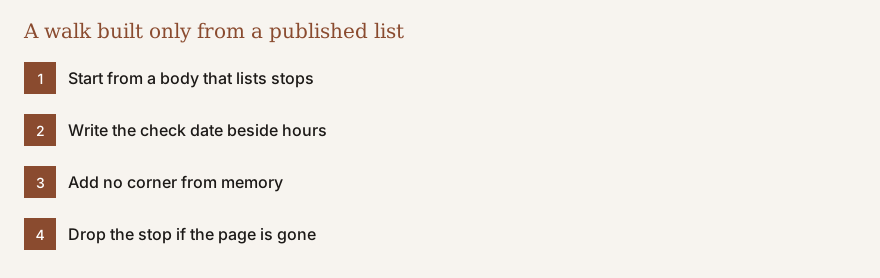
- Choose an organisation that publishes a walk, a map, or a self-guided note.
- Copy only the stops that page lists, with the page title.
- Put a “checked” date next to any hour, fee, or access sentence, and delete the sentence if you did not re-open it.
- Do not insert a cafe, a viewpoint, or a shop because it would make the afternoon nicer.
- If the page has moved or the building is closed to the public, drop that stop rather than guessing.
The National Park Service standards page is useful as a looking guide once you are in front of a historic building: character, repair before replacement, and new work that stays distinguishable. It is not itself a walking tour, and it does not list New York addresses.
What a later edition can add
When a specific route page is on the desk, the weekend culture section can hold the stops in a table with the check date in its own column. Until that table exists, treat this article as methodology. Character of a retail block—also not a tour—is explained in Reading the Streetscape.
Method and sources
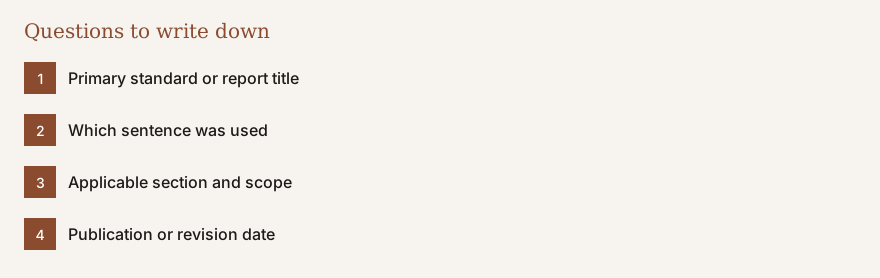
Method essay; standards citation is the National Park Service rehabilitation page. Updated October 2026.