A shopfront starts to look accidental when a repair ignores the frame, the glass division, and the panel at the base. Read those three parts first, then decide whether the work is a repair or a new piece. For the brick facing around an opening, compare anchored versus adhered brick veneer walls at storefronts by their support, cavity, and drainage details; for upper-story double-hung wood sash above the commercial base, see historic window restoration versus replacement under NPS Preservation Brief 9.
Match design, colour, and texture when a distinctive feature must be replaced, and keep new work visibly new. That pairing comes from the Secretary of the Interior’s Standards for Rehabilitation. Standard 6 says a deteriorated historic feature shall be repaired rather than replaced, and that a replacement shall match the old in design, colour, texture and other visual qualities and, where possible, materials. Standard 9 says new exterior work shall not destroy characterizing materials, shall be differentiated from the old, and shall be compatible in massing, size, scale and architectural features. Standard 7 says chemical or physical treatments that damage historic materials shall not be used, and that cleaning, if appropriate, uses the gentlest means possible.
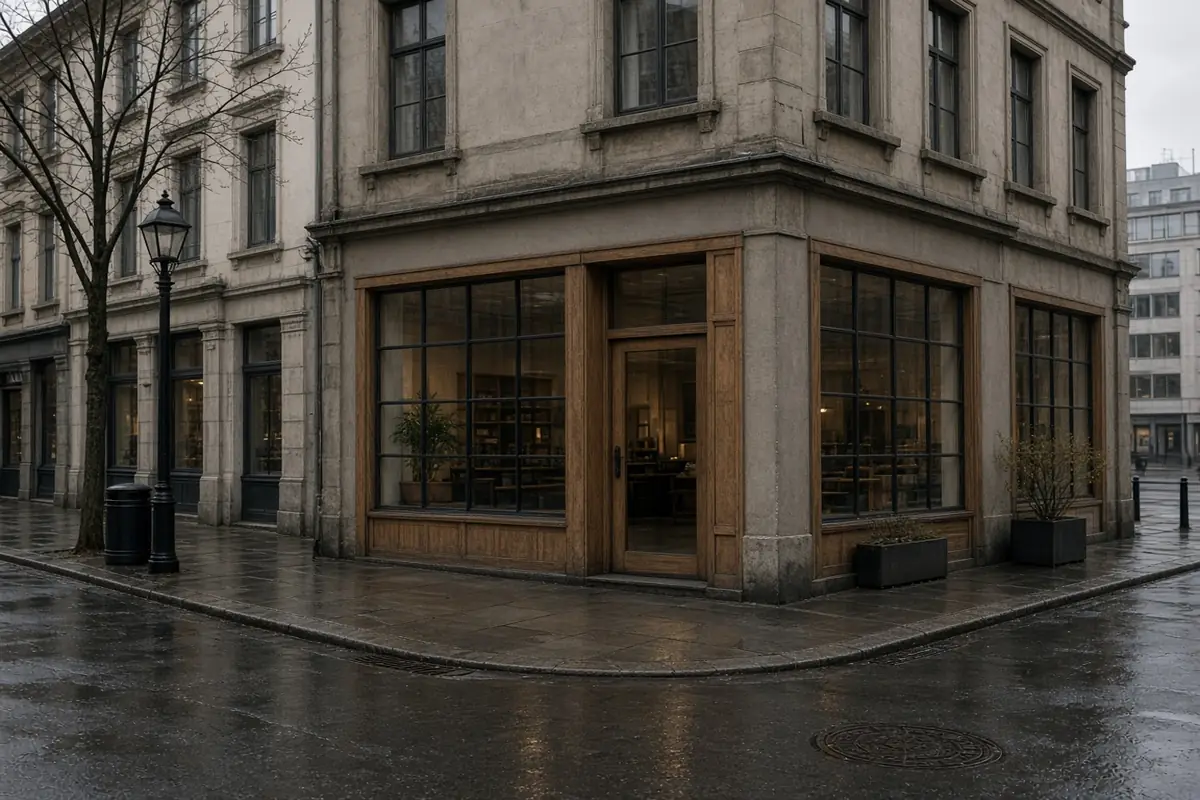
Reading the street face
The photograph shows a wet corner with a timber frame and large panes—a clear view of frame, glass division, and base panel as a composition. No brand is shown. Maintenance intervals, coating chemistry, and local permit rules belong in a project file or product sheet; they are outside the scope of this street-face reading.

Related preservation guidance
The National Park Service also publishes technical briefs on historic storefronts. When that brief is consulted for a named project, its recommendations can widen the sentences above. Until then, the ten rehabilitation standards remain the governing frame for appearance, repair, and gentle cleaning.
For the block around the shop, rather than the frame itself, see Reading the Streetscape. The retail design section is the parent page.
Method and sources
Primary source: the National Park Service standards page linked above. Updated October 2026.